
Local LLMs Instead of Jack-of-All-Trades Models: Why Lean AI Models Are the Future of Process Automation
Artificial intelligence can change that. But the more powerful AI systems become, the larger, more expensive, and more resource-intensive they also become. This raises a crucial question: Do we really need an AI system that can do everything—or is one that excels at handling our specific task enough?
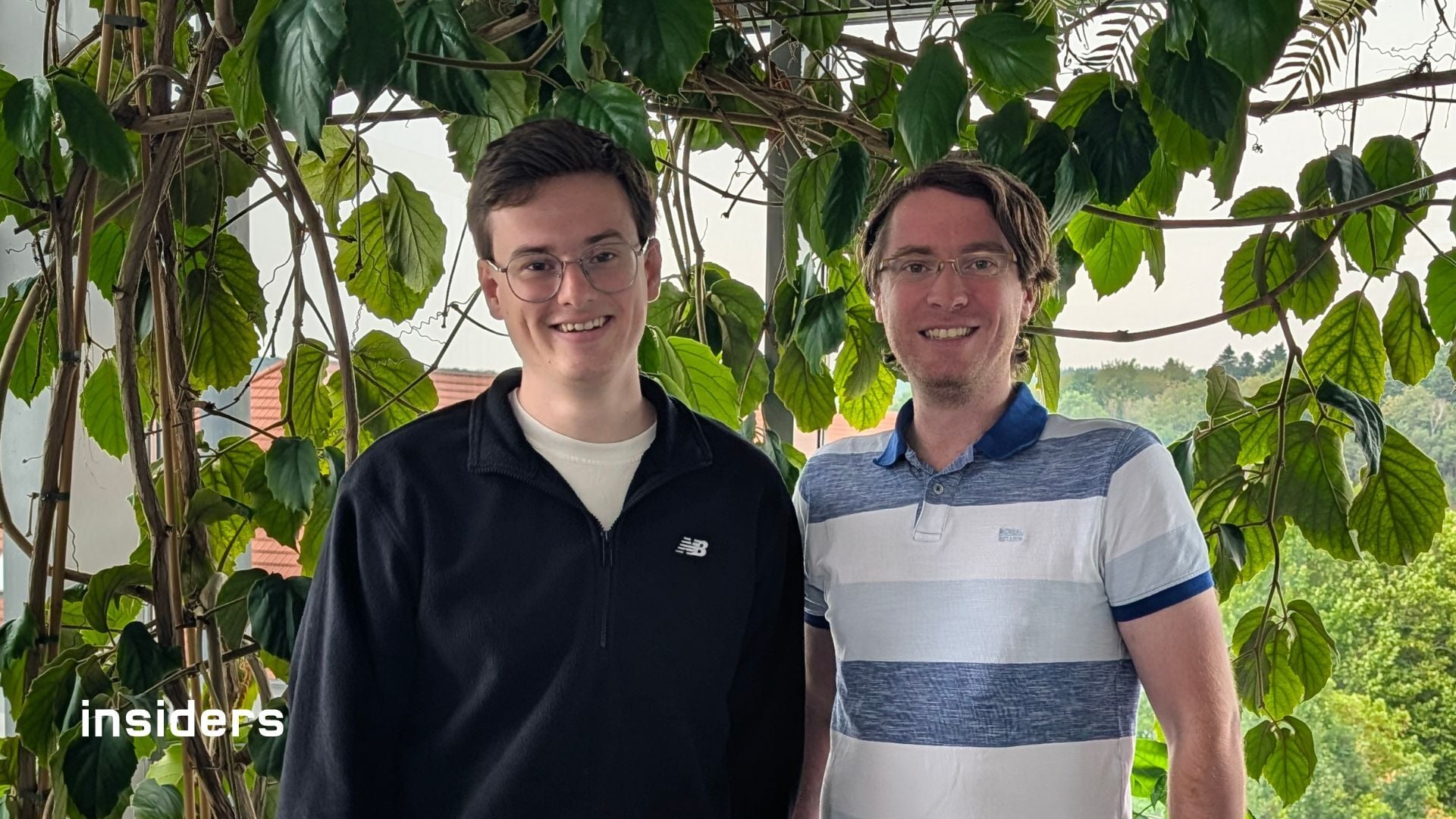
The SLIMDOC research project—a collaboration between Insiders and RheinMain University of Applied Sciences—is dedicated to precisely this task.
AI Is Becoming More Powerful—and More Expensive
Modern AI language models like GPT or similar systems are impressively versatile. They write texts, answer complex questions, translate languages, and solve programming tasks. But this versatility comes at a price: The models are growing larger by the month, and running them requires enormous amounts of computing power and energy—and thus also money.
For companies that want to use AI for clearly defined tasks—such as automatically processing an invoice—an obvious question arises: Why should a model that processes documents also know how to cook pasta?
It doesn’t need to. But that’s exactly the problem: Today, we either use large general-purpose models that are hardly economically viable to run locally, or small specialized models that, while resource-efficient, but also require time-consuming training with manually annotated data.
What is SLIMDOC—and what makes it special?
SLIMDOC stands for “Synergistic Lightweight Multimodal DOCument Analysis” and is a research project at RheinMain University of Applied Sciences with a clear goal: AI models that reliably analyze documents—in a leaner, faster, and more sustainable way than before.
The approach: Through “Knowledge Distillation,” the knowledge of large language models is transferred to small, task-specific models. The result is compact language models that do only what they need to—without relying on the cloud, without unnecessary resource consumption, and with full data protection.
Since documents rarely consist solely of text, SLIMDOC relies on multimodal analysis: text, images, and layout are evaluated together. Two specific use cases are planned — analysis of annual reports and plausibility checks for insurance claims — in collaboration with R+V Insurance and Doxis.
Why We’re Involved
At Insiders, we’ve been automating document-centric business processes for more than 25 years. Whether handwritten forms, complex spreadsheets, scans, or digital PDFs: Our software reads, understands, and processes documents of all kinds.
We’ve long relied on a combination of our own AI technology and large language models. And we’re realizing more and more clearly that the direction in which AI models are evolving will sooner or later become a serious problem for practical application.
That is why we are actively involved in research—and serve as a key industry partner in the SLIMDOC project.